| Nov. 28 | Impact Investors Earn More Than Good Karma The majority of small, social enterprises aimed at doing good in the developing world are profitable, according to a new report by the Global Impact Investing Network. This is impressive given the size and the scope of the GIIN survey, which looked at financial data from nearly 2,400 organizations across the globe. The organizations are mission-driven businesses receiving or seeking impact investment capital. Source: MarketWatch |
| Nov. 27 | Nepal: Microfinance Institutions Double in Five Years People's access to finance increases‚ MFIs lack funds. The number of microfinance institutions has witnessed almost double growth in the last five years as the wholesale lending by banks provide easy source for funds. Despite the wholesale lending from banks and financial institutions, the microfinance institutions often suffer from lack of funds. Source: The Himalayan |
| Nov. 27 | Rwanda: Savings and Credit Co-operatives to Offer Loans, Take Deposits Rwanda has turned to grassroots savings mobilisation schemes to increase access to financial services. The National Bank of Rwanda (BNR) has licensed 355 of the 416 savings and credit co-operatives (Saccos) operating across the country to offer loans in addition to collecting deposits. Source: The East African |
| Nov. 24 | India: With Bastion in Andhra Pradesh Crumbling, MFIs Turn to Other States While south India has been the bastion of MFIs, the north is still a tough terrain. But with the microfinance business coming to a standstill in Andhra Pradesh, their primary market, following the enactment of the MFI Act, the MFIs have begun focusing on northern states. Source: Business Standard |
| Nov. 23 | Elisabeth Ryhne: Making Consumer Protection a Reality in Microfinance Judging from last year's lobbying by the financial sector to block the new Consumer Financial Protection Bureau, one would think banks are just plain anti-consumer protection regulation, almost by reflex. That's why it is so encouraging to see the global microfinance industry embrace a campaign to promote strong consumer protection Source: The Huffington Post |
| Nov. 23 | India: Arman Financial Services Ltd. Receives Fresh Private Equity Funding From Belgium Based Incofin Arman Financial Services Ltd. (Arman), an Ahmedabad based NBFC listed on the Bombay Stock Exchange (BSE), today announced that the Board had approved the proposed equity investment from Incofin, an investment management company based in Belgium that manages several private equity funds. This is now awaiting the approval of the shareholders of Arman. Source: Unitus Capital |
| Nov. 23 | What the 1 Percent (of Capital Markets) Could Do for Impact Investing Anthony Bugg-Levine and Jed Emerson in their new book Impact Investing: Transforming How We Make Money While Making a Difference discuss how opening just one percent of these assets for impact investing would create "a capital pool four times larger than all current annual official donor flows and almost three times greater than the total of U.S. annual charitable giving." Source: Next Billion |
mardi 29 novembre 2011
Symbiotics NewsWatch #187, 29 November 2011

Inde : Une crise de la microfinance?
Plus d’un an après l’instauration d’un texte qui régule le secteur dans l’Andhra Pradesh, les sociétés spécialisées indiennes multiplient les annonces de pertes colossales. Si certains s’inquiètent pour l’avenir du secteur, l’administration refuse de s’apitoyer et rappelle que la cause de la crise, c’est les pratiques douteuses de toute une filière.
En octobre 2010, le gouvernement de l’État d’Andhra Pradesh légiférait pour encadrer les activités des sociétés de microcrédit. Il réagissait ainsi à chaud à plusieurs dizaines de suicides de clients surendettés et poussés à bout par des pratiques de recouvrement inhumaines.
Un règlement qui aura été d’une inefficacité inattendue, car les pertes des sociétés de microcrédit n’auront jamais été aussi importantes. Le leader du secteur, SKS, a annoncé courant novembre 2011 qu’il se préparait à passer en perte la totalité de son portefeuille dans l’État. Ce n’est pas le seul, puisque selon un rapport référence, 96% des actifs des sociétés basées en Andhra Pradesh sont considérés comme non performants.
C’est donc une crise de la microfinance qui plane, et ses acteurs principaux réclament des mesures sous peine pour beaucoup de devoir mettre la clé sous la porte. Une loi de régulation nationale promise depuis longtemps pourrait permettre d’améliorer la situation en gommant les mesures les plus extrêmes de la réglementation locale. Mais le projet de loi est ralenti par les objections du ministère du Développement rural et la longueur du processus législatif.
Réguler ou pas?
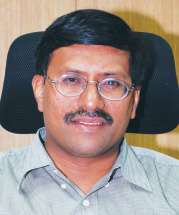
Reddy Subrahmaniam.
C’est que le ministère du Développement rural se satisfait entièrement de la situation actuelle. Reddy Subrahmaniam, premier secrétaire du ministère, était aussi l’un des principaux rédacteurs de la régulation en Andhra Pradesh. Ce dernier ne regrette rien, et parle d’habitudes qui peuvent et doivent changer :
Le cœur du problème, c’est le fonctionnement de ces sociétés. Leur modèle, qui n’a pas changé en dehors de l’Andhra Pradesh, est le suivant : prêter sans considération de ce que l’emprunteur fait avec l’argent, puis recouvrer sans considération de la capacité de l’emprunteur à rembourser. Prenez l’exemple inverse deStree Nidhi Bank (une coopérative de crédit formée par des femmes). Cette structure a un taux de remboursement de 100%. Comme quoi c’est possible.
Si le ministère du Développement rural maintient le cap et refuse de céder, la crise de la microfinance en Inde risque donc d’aboutir à deux résultats possibles : soit la réduction drastique de l’envergure de cet outil d’inclusion financière, soit un changement vers des pratiques plus responsables envers les emprunteurs. Gageons que Reddy Subrahmaniam et consorts se battront pour arriver au second résultat.
HDFC, Vodafone bring m-paisa to India’s unbanked
Microfinance Focus, November 28, 2011: HDFC Bank in collaboration with Vodafone India has launched ‘HDFC Bank MobileBank Account with Vodafone m-paisa’, bringing mobile banking to millions of unbanked Indians.
HDFC Bank has appointed a Vodafone India subsidiary company as a Corporate Business Correspondent (BC), thereby allowing the Vodafone’s select retailers to represent the bank as sub-agents.
By providing banking transactions at such sub-agents, this HDFC Bank-Vodafone India partnership effectively delivers last mile access to remote areas.
Through this arrangement, customers can now perform basic banking transactions on the mobile phone and even deposit and withdraw cash, at appointed Vodafone m-paisa outlets, without having to go to bank branches.
In Rajasthan, the first state, where this national partnership has been implemented, over 2,200 retailers across 320 villages and 54 towns are already operational in opening HDFC Bank MobileBank Accounts with Vodafone m-paisa.
RBI Deputy Governor, Dr. K.C. Chakrabarty, launched the HDFC-Vodafone financial inclusion initiative in Jaipur, Rajasthan. HDFC Bank MD, Mr. Aditya Puri and Vodafone India Director – Business Operations, Mr. Sunil Sood were present on the occasion.
HDFC Bank has a Board-approved plan to bring 10 million families under financial inclusion over a five-year period and this initiative is a step towards achieving that objective, said Mr. Rahul Bhagat, Country Head - Retail Liabilities, Marketing& Direct Banking Channels, HDFC Bank.
lundi 28 novembre 2011
“Poor people need money management services”- Stuart Rutherford
.JPG?1322452736)
Microfinance Focus, November 28, 2011: Stuart Rutherford is the author of The Poor and Their Money, and founder of SafeSave, a microfinance institution in Bangladesh. On the sidelines of the recent Arusha Savings Groups Summit, Rutherford spoke to Vanesa Corrales on the frontiers of the Savings movement.
Microfinance Focus: Saving is called the forgotten half of microfinance. Why microfinance institutions keep away from it?
Stuart Rutherford: First one is regulation. In some countries it is not allowed. Second is cost. Lots of MFIs believe that to mobilize savings is too costly. Third, there is an inherited assumption that what people need is loan. Behind that lays a common popular conception that poor people can’t save because if they can’t eat properly, they can’t save.
Microfinance Focus: From which level of poverty do you think people can start saving?
Stuart Rutherford: If you are handling money you can save no matter how poor you are, you can save. There are some people who live in the end of their lives on charity, fed by their families, these people don’t touch money. There are also remote areas in Africa, Asia and also South America with subsistence farming crops, they don’t touch money, and obviously microfinance is not for them. We are talking about financial savings and if you don’t deal with money you don’t have the capacity to save. But everybody else in my experience, the vast majority of them do.
You got those active savings and almost everybody no matter how poor is involved in active savings. You keep your money back. It is true that sometimes you may convert your money savings into something else. You may get your income and you may buy a sack of rice with this rather than to convert it in formal money.
Microfinance Focus: In urban areas where the community feeling is not so strong as in villages and people are moving, how can we adapt the saving methodology to this scenario?
Stuart Rutherford: It is not so much difficult to adapt savings groups in urban areas, to run a savings group we need trust. Trust is essential. The question is: where does this trust come from? There is a tendency for us to assume that trust comes from prior knowledge. But trust is rather verb than a noun. Trust is something you make. Trust come from revealingly keeping of promises and savings groups work because everybody says for instance that we have to put 20 shillings every week, and we do and next week we put 20 shillings, so we build trust. And we don’t have to get to know the people.
If I take you in the slums of Bangladesh which has very big and poor urban areas you will see traditional savings groups not the one’s that the formal banks use, you will see ROSCAS and ASKAS working extremely well and they often don’t know each other but what they do know is that they are partners in that ROSCA are putting 20 taka every week. Trust is something that must be made and remade and comes from repeatedly keeping of promises.
About how to help people to save - just give them the reliable chance and they will. In Bangladesh I have a little MFI and we work in very poor slum and we just offer people the opportunity to save. We have officers who go around and visit our clients every day. Every day we go to their shop or house and we ask if they would like to save something, so if they have got some money there they do and if they don’t have that, they do not save. After few weeks if you come back you will be astonished about how much they manage to save. When you have been doing this for a bit, you become used to me and I become used to you and we built trust between us because trust is based on promises. I am a staff member and I promise you I will come and visit you each day and I do and when you want to withdraw your money it will be there and you will be able to take it and you test it. You will alone come to the office and you find it is true and we build trust. No groups, nothing illegal, we can’t call the police if you don’t pay we lend you money and we come every day to visit you. In my experience, poor people and especially women are always looking forward to save.
Microfinance Focus: Is that possible in big urban areas where people move so much?
Stuart Rutherford: That is a very nice point, and that is why a lot of saving clubs have a very short life. That is a risk and people know it. Therefore most well run ROSCAS have a life of 3 or 2 months. The main reason is to eliminate this risk. Get 20 people together in a formal ROSCA and if they are running for 20 years they will be in a trouble but if they do it for 6 months they can transform a bit good savings.
Rickshaw drivers in Bangladesh generally don’t know each other and they come from different villages, but they all park the rickshaw at the same place at night. They started a ROSCA. Each day at the end of the day they come back to park their rickshaw and they give 20 taka to the guy who runs it. Every time the 20 taka are amounted to buy a new rickshaw they buy a new rickshaw and they have a lottery. These people do not know each other, they come from different villages from Bangladesh but they feel working and putting the 20 taka.
Microfinance Focus: Do you think that now microfinance institutions are more committed to savings?
Stuart Rutherford: Generally speaking they are when the legal environment allows them to. Even when the legal environment doesn’t allow them to, they may be still interested in and they might be in look out for ways of doing it to get them around the law or maybe lobbing in the governments to change the law. Grameen used to believe that savings wasn’t important for poor people. At the beginning of this century they change their mind. They happened to have a legal identity, a legal registration that allows them to collect savings. When they changed their mind about savings, which happened around 2001-2002, they opened up to possibility of savings introducing very new savings products to the clients in the groups. In case of savings if you look at Grameen Bank’s balance sheet now you will see that for every 100 dollar of loan they have 150 dollars in savings. So, people are saving much more than they are borrowing.
Now, other big and medium size MFI would like to do that but they can’t because they are still NGOs and the law stops them to collect savings except in some limited situations. But they are interested in having some changes. So that would be an example to say yes in many countries around the whole world MFIs have been more interested in developing savings products. Because savings is a product that clients are demanding and also they think that savings is a very good way to fund the loan book. They can get all the money they need for lending from savings.
Microfinance Focus: Can Savings Groups be sustainable?
Stuart Rutherford: There are a number of ways in which savings groups as individual and as movement can be sustainable.
What helps Individual Savings Groups and what gives them the chance to be sustainable is because people need them. We don’t have to go to a well rounded savings group to see that women are sitting there because it’s a nice NGO, but they are there because they want to save, they know they help them manage their lives. There is a demand there.
The other level is ever improving levels of management skills in techniques. There is a huge amount of progress made in the last decade in the methodologies of savings groups, book keeping and all this issues. This is all greatly tiny details but it’s important. On the other hand provided that demand stays there, they are likely to sustain, provided that they are getting better and better and more efficient and less and less costly. But it doesn’t mean that each individual group will sustain. Here I want to make the comparison with genuine informal ROSCAS. Informal ROSACAs start , they spread and they stop again and again, because people move on somewhere else, each individual ROSCA doesn’t last forever but the mass of ROSCAS there are in the community goes for years and years.
There are two quite different strategies with regard to sustainability. There is the strategy that bank uses which is called strategy of permanent and growth. If you are a bank you have to be permanent, you cannot afford to break up. You have to keep on growing; otherwise you lose your place in the market.
But in saving groups, there is a tiny difference which is a strategy of replication. The bank continues to give service and continues to grow and savings groups continue to give a service because although savings groups as individual entities have a short life but as a movement they are there.
Microfinance Focus: In microfinance all the products and methodologies seems to focus on women in groups. Is it because it is cheaper than individual methodology?
Stuart Rutherford: There is some truth in that. Again let’s go to Bangladesh. There is no doubt that in Bangladesh where microcredit is developed in 1980s they were lucky because two things happened at the same time. Number one, the microcredit organizations themselves found out that it was easier to get repaid from women than from men. So it was better for them if they focused on women. At the same time in the wide world of development, all the World Bank and big donors were planting in the idea of the other forgotten half: women and development. So without wanted to sound too cynical, it was very convenient for BRAC and Grameen to learn that it was safe to work with women and to present that in tune with the world development goals of improving position of women in society.
It sounds cynical but I just want to add the non-cynical side of this: it did work. Women in Bangladesh did become more self-confident, did become better in saving money. No doubt it is a result of being in microcredit groups. Go around in microcredit groups in Bangladesh, pick up the old ones and ask if they handled money before the microcredit group. The man was always handling the money, they stayed at home instead. They didn’t understand money, then gradually they became members of these microcredit groups and they started handling money. So she came to understand concept as interest, value for money. And now in many families it is the woman who is the money manager and she is doing it better than the man.
So these things are presented as a sort of social success but sometimes it has been exaggerated. Sometimes it is true. It has helped women to come out in public space and at individual level it is very important especially for women. If you are poor, when you join your Grameen credit group or your BRAC credit group it might be that it is the first time in your life that you are member of a social entity because you were too poor to go to the school. You never learnt about institution, you are always in the household, the only institution that you use is at a private household level. Take a woman like her and give her the chance to sit in a Grameen bank credit group, it is a tiny new experience just exposing women to social entities, to ways of interaction with other people, which is quite different than to be focused in a household.
Microfinance Focus: And in which methodology do you think they improved more? Which one do they prefer?
Stuart Rutherford: It’s a hard one. Well, context is very important here. I think in the early days in Bangladesh the group was very important. I think it would have been hard to kick off microfinance within individual plans in the early days. The advantage of the group offer was very important in those days. Now it is very different. In Bangladesh the MFI that I run don’t use groups because I know that women are fed up with groups. Because loans of MFI are not so big and if in a small family if your husband or son asks you for large amount of money for the business, you have to join three or four of these things and to attend three or four of these mornings’ meetings per week. So they would much prefer individual service. In my MFI we don’t have groups, we don’t make people responsible for each other’s loans, this idea of liability is horrible. So context is important and certain times groups might have a strong value.
Here we are talking about the retail part of the industry, when the funds come from outside or savings portfolio and so on. There is the other part of the industry - savings groups; they have to have groups because that is how they can make capital. If you are dependent of pulled capital for financial services, you have to have a group. You don’t have to meet every week and go through this ritual of boxes and so on, but you have to have at least a bunch of people to be pulling savings. But the retail industry is free of that, because they can find funds everywhere and can accept savings from individuals and provide loans to individuals from their resources.
Increasingly we are seeing the individual lending and individual savings accounting bigger and bigger share of MFIs, and over the last ten years lot of MFIs started up from scratch as providers to individuals, so they jumped the old group thing, especially in not so quite poor environment as in East of Europe, this is because here the role of the group is less useful.
Microfinance Focus: First was credit revolution, now savings revolution, what is the next one?
Stuart Rutherford: Some people think about insurance revolution, but I am a little bit skeptical about that. Insurance services are for people little bit richer, with a little bit resources. It is not a reciprocal service. Now, very poor people are not likely to be willing to made whole serious investment in these risks, not if it is not reciprocal. If someone were to invent general purpose insurance and if you could buy an insurance policy that pay out everything, then you can make a version for poor people, but it is impossible.
What I would like to see next will be, what I call, general purpose money management services. What I see when I talk to poor people around the world is that they need help managing their money. Poor people need to be helped to save and borrow money, because it is hard for them to have to spend junks of money to buy dinner, to buy a bicycle, bury the father etc. You need to assemble lump sums through life. All loans are simple advances against future savings. On the whole loans and savings are actually the same thing. In one case you make the payment first in other case you make the payment afterwards. The whole point of doing it is formalized sums. I would like to see the industry focusing on that fact. Poor people need to form lump sums of all kind of sizes and periodicity, some of them regular, some of them irregular and they need financial tools for that.
By Vanesa Corrales,
AWB COURTISE LES TPE
LA BANQUE LANCE LE «PACTE RASMALI»
DES SOLUTIONS DE FINANCEMENT QUI PEUVENT ATTEINDRE LE 1 MILLION DE DH
LA BANQUE LANCE LE «PACTE RASMALI»
DES SOLUTIONS DE FINANCEMENT QUI PEUVENT ATTEINDRE LE 1 MILLION DE DH
Attijariwafa bank lance le «Pacte Rasmali», une offre conçue sur mesure aux attentes des petites structures en matière de financement avec des tarifs avantageux

CHOSE promise chose faite. Pour accompagner les TPE dans leur développement, Attijariwafa bank lance le «Pacte Rasmali», une offre conçue spécialement pour les petites structures en matière de financement. «Ces nouveaux produits, destinés spécialement aux petites entreprises, auront une tarification très avantageuse leur permettant le développement de leurs secteurs d’activité tels que l’artisanat, le commerce ou encore l’agriculture», précise Mohamed Mihrab, responsable de la petite entreprise au sein du groupe Attijariwafa bank lors d’une rencontre tenue mercredi sous le thème «les TPE au cœur du développement socioéconomique».
Le «Pacte Rasmali» se décline en 4 produits essentiellement des crédits d’investissement. Il s’agit premièrement du «Crédit Rasmali Express». Une sorte de crédit équipement dont le montant peut atteindre jusqu’à 150.000 DH et remboursable sur une durée de 48 mois. On retrouve également la solution «Leasing Rasmali» qui est destinée à financer les investissements en biens immobiliers ou encore en biens d’équipement. Un plancher a été fixé à 20% du chiffre d’affaires ou 50.000 DH pour un plafond de 400.000 DH. Pour le leasing mobilier il sera remboursable sur une durée allant jusqu’à 60 mois. En revanche, pour la partie immobilière, c’est une maturité qui peut atteindre les 10 ans. Concernant la troisième solution «Rasmali Istitmar», elle concerne tous les projets de création et d’extension. Avec un maximum de 1 million de DH, la banque finance jusqu’à 70% du programme d’investissement. La durée de remboursement pour ce type de financement est de 12 ans maximum avec un différé de 3 ans. Cependant, les entreprises désireuses de souscrire à ce dernier produit peuvent bénéficier de la garantie de la Caisse centrale de garantie (CCG) à condition de répondre à quelques critères d’éligibilité. Ainsi, l’entreprise doit entre autres être de droit marocain créée depuis plus de 3 ans, mais également présenter un programme d’investissement potentiellement viable. Dans ces conditions, la CCG garantie 80% du projet quand il s’agit de création et 60% s’il y a eu lieu d’extension.
Le dernier produit figurant dans le «Pacte Rasmali» est un crédit de trésorerie. Il s’agit du «Découvert Rasmali», une formule simple de découvert à destination de la clientèle TPE. Le montant de ce crédit de trésorerie peut varier jusqu’à 10% du chiffre d’affaires de la structure avec un plafond de 100.000 DH.
R. B. @leconomiste.ma
Le dernier produit figurant dans le «Pacte Rasmali» est un crédit de trésorerie. Il s’agit du «Découvert Rasmali», une formule simple de découvert à destination de la clientèle TPE. Le montant de ce crédit de trésorerie peut varier jusqu’à 10% du chiffre d’affaires de la structure avec un plafond de 100.000 DH.
R. B. @leconomiste.ma
COMMERCE ÉQUITABLE: CE QUE PRÉVOIT LE PROJET
LA CERTIFICATION, UN PRÉALABLE POUR INTÉGRER LE SECTEUR
FIXATION DES PRIX, FORMATION, ACCÈS AU FINANCEMENT… LES TÂCHES DE LA PLATEFORME NATIONALE
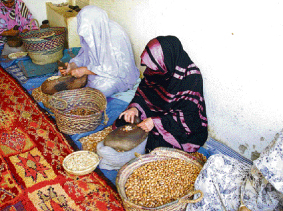
La commercialisation des produits du terroir devra être mieux organisée. Le commerce équitable permettra de structurer le circuit en évitant la multitude d’intermédiaires
LA CERTIFICATION, UN PRÉALABLE POUR INTÉGRER LE SECTEUR
FIXATION DES PRIX, FORMATION, ACCÈS AU FINANCEMENT… LES TÂCHES DE LA PLATEFORME NATIONALE
LA CERTIFICATION, UN PRÉALABLE POUR INTÉGRER LE SECTEUR
FIXATION DES PRIX, FORMATION, ACCÈS AU FINANCEMENT… LES TÂCHES DE LA PLATEFORME NATIONALE
La commercialisation des produits du terroir devra être mieux organisée. Le commerce équitable permettra de structurer le circuit en évitant la multitude d’intermédiaires
C'est pas un pas de plus dans l’organisation de l’économie solidaire. L’avant-projet de loi sur le commerce équitable promu par le ministère chargé des Affaires économiques et sociales permettra de structurer le commerce des producteurs économiquement défavorisés.
Dans ce projet de loi, le commerce équitable est défini comme un mode de partenariat commercial qui implique la mise en application et «le contrôle de manière transparente et indépendante d’un ensemble d’engagements». C’est le cas par exemple de la fixation d’un prix juste et équitable sans corrélation avec le prix du marché. Il devrait couvrir obligatoirement un certain nombre d’éléments: les frais de production, les besoins élémentaires du producteur et de sa famille, la marge bénéficiaire suffisante revenant au producteur ou au prestataire à même d’assurer le développement de son activité. Un prix de référence pourrait être livré à titre indicatif par la Plateforme nationale du commerce équitable. Parmi les engagements auxquels il faut se plier figure aussi l’appui aux organisations de producteurs ou de travailleurs engagés dans le commerce équitable et la garantie d’un accès direct aux marchés, limitant ainsi le nombre d’intermédiaires.
Le projet de loi limite aussi le champ du commerce équitable aux biens et services qui disposent d’une certification «Commerce équitable». Celle-ci devrait être délivrée par un organisme agréé par la Plateforme nationale du commerce équitable, une entité prévue par la loi. Elle sera rattachée au département chargé de l’Economie sociale et sous le contrôle de la Commission nationale du commerce équitable qui sera également créée par voie réglementaire.
Dans cette activité, la Plateforme nationale du commerce équitable est appelée à jouer un rôle important. Elle s’occupera de la promotion, de la sensibilisation et de l’information. Elle aura aussi à assumer le rôle de fédérateur et de mise en relation des acteurs. L’encadrement, l’accompagnement et l’aide à la formation seront également de son ressort. Idem pour l’aide et l’accès au financement. La formation des certificateurs du Label national et l’octroi des autorisations d’exercice lui seront également confiés.
K. M. @ leconomiste.ma
mercredi 23 novembre 2011
A Lahraouine au Maroc, l’éducation non formelle fait école
L’incurie du système éducatif est considérée comme le premier des fléaux marocains.

(ABDELHAK SENNA/AFP)
École à Marrakech. Chaque année, un million de Marocains âgés de 6 à 16 ans quittent le système scolaire.
Le concept d’éducation non formelle, développé par la Fondation Zakoura, permet d’acquérir en trois ans l’enseignement de l’école primaire.
Environ 22 000 enfants et adolescents non scolarisés ou déscolarisés ont ainsi pu réintégrer le système.
Lahraouine, immense quartier d’habitat sauvage aux confins du grand Casablanca. Au milieu de bidonvilles en parpaings, de ruelles chaotiques où errent, en quête de détritus, des moutons faméliques, l’école primaire publique Abdeljalil-Benhida, moitié en dur, moitié en préfabriqué, est une petite enclave d’espoir.
Fatima Tah, la directrice, œuvre en missionnaire depuis dix ans. « Je fais maintenant partie du quartier. » Elle se promène dans les rues en bienfaitrice, accepte volontiers de le faire connaître. « Mieux vaut être accompagné, les habitants pourraient ne pas comprendre la présence d’un étranger », confesse-t-elle.
C’était sans compter avec l’irruption d’un représentant des autorités locales venu mettre son veto à la visite, pour « raisons de sécurité », mais peut-être aussi parce que le Maroc ne souhaite pas montrer l’envers du décor d’une société dynamique, qui affiche son entregent sur la scène internationale, ouvre son pays aux investisseurs, mais laisse encore sur le bas-côté une grande partie de sa population.
Fatima Tah connaît trop l’immense dénuement des habitants de Lahraouine. C’est pourquoi elle a accepté l’ouverture d’une école au sein de son école. Depuis la rentrée scolaire, la Fondation Zakoura-éducation s’est installée dans ces murs, pour dispenser son programme d’éducation non formelle, destiné aux enfants non scolarisés ou déscolarisés.
96 % DE RÉUSSITE À L’EXAMEN D’ENTRÉE AU COLLÈGE
Fatima Tah a elle-même fait du porte-à-porte dans le quartier pour persuader les familles d’envoyer leurs enfants dans cette école pas comme les autres, dont le modèle vient du Bangladesh. Dans la classe Zakoura, Abdelhak Achamlal, l’animateur, fait face à une trentaine d’élèves âgés de 8 à 16 ans. À 14 ans, Pitchoun Omari avait quelque temps fréquenté l’école coranique mais n’avait jamais été scolarisée jusqu’à ce que la Fondation Zakoura frappe à sa porte. « Pour les filles, il faut convaincre les parents de les laisser prendre le chemin de l’école », précise Abdelhak Achamlal.
Dix des trente élèves de la classe n’ont jamais connu l’école. Les autres ont été scolarisés un, deux, trois ou quatre ans avant d’abandonner. Les yeux de Karam Ragae, 13 ans, s’embuent de larmes à remuer les mauvais souvenirs, entre un maître tyrannique à l’école publique un temps fréquentée, puis le retour à la maison où il fallait aider son père, petite main au marché aux légumes, ne rapportant pas assez pour vivre.
Le bouche-à-oreille bat son plein, les enfants se passent le mot pour aller à l’école. « Ils sont hypermotivés, ils veulent être des enfants comme les autres », souligne Abdelhak Achamlal. Et lui veille de près. « Si l’un ou l’autre manque les cours, je vais chez lui voir ce qui se passe », souligne-t-il.
Il se donne pour objectif que ses 30 élèves, analphabètes ou non, réussissent en trois ans le programme des six années de l’école primaire pour poursuivre au collège ou, pour les plus âgés, dans une formation professionnelle. La fondation affiche des résultats enviables avec un taux de réussite de plus de 96 % à l’examen d’entrée au collège de ses élèves.
« LES PARENTS CHOISISSENT LES HORAIRES POUR ÉVITER L’ABSENTÉISME »
La recette ? Une adaptation aux contraintes locales. L’enseignant recruté localement parle le tamazight dans les régions berbérophones. De plus,« ce sont les parents qui choisissent les plages horaires pour éviter l’absentéisme, car les enfants sont une force de travail d’appoint pour les familles », explique Youssef Mouaddib, directeur de la fondation. Pour rattraper le temps perdu, les cours ont lieu trois heures par jour, six jours par semaine, onze mois par an.
À l’école Abdeljalil-Benhida, une autre classe accueille les mères venues suivre des cours d’alphabétisation. « Une femme éduquée est mieux respectée par son mari, c’est une arme contre la maltraitance », affirme, enthousiaste, Noureddine Ayouch, le « roi de la pub » au Maroc – à la tête de l’agence Shem’s publicité –, trublion de la société marocaine et créateur de la Fondation Zakoura en 1995.
Noureddine Ayouch s’était lancé d’abord dans le microcrédit. Lui qui vient d’une grande famille découvre à l’époque cet autre Maroc de villages à 100 % analphabètes. « Une honte ! » s’indigne-t-il. Il lance alors Zakoura éducation, qu’il ne cesse de décliner à tous les publics marocains en mal d’éducation (1), les enfants et adolescents, leurs mères, les élèves de l’école publique en difficulté, et maintenant des classes de maternelle pour mettre les petits sur les bons rails de la scolarisation.
« Un million d’enfants de 4 à 6 ans ne sont pas préscolarisés, une partie d’entre eux ne prendra jamais le chemin de l’école. Tous les enfants préscolarisés par Zakoura continuent à l’école publique », explique Youssef Mouaddib, conscient cependant que la fondation ne compense que très marginalement les ratés de l’école publique marocaine.
----------------------------------------------------
UN PEU PLUS DE LA MOITIÉ DES MAROCAINS EST ALPHABÉTISÉE
D’après le rapport 2011 du Programme des Nations unies pour le développement (PNUD) sur le développement humain, le Maroc est classé à la 130e place sur 184 pays, loin derrière ses voisins maghrébins (l’Algérie est 96e , la Tunisie 94e et la Libye 64e ).
La durée moyenne de scolarisation est de 4,4 ans contre une durée attendue de 10,3 ans. Le taux d’alphabétisation des plus de 15 ans est de 56 %.
D’après l’initiative marocaine de développement humain (INDH), programme de lutte contre la pauvreté et l’exclusion lancé en 2005, le taux d’alphabétisation des 15-24 ans a atteint 80 %. D’après la Fondation Zakoura pour l’éducation, un million d’enfants de 4 à 6 ans ne sont pas préscolarisés, tout comme un million des 6-16 ans ne sont pas scolarisés (sur une population marocaine de 32 millions). Chaque année, 250 000 enfants quittent l’école primaire et 200 000 adolescents le collège.
La Fondation Zakoura a créé 392 écoles d’éducation non formelle dans lesquelles elle a scolarisé 22 000 enfants de 8 à 16 ans. Elle a de plus alphabétisé 80 000 adultes.
(1) L’élite, francophone, est formée dans le système français alors que l’école publique a été arabisée, un clivage linguistique qui accentue la fracture sociale marocaine, d’autant plus que l’enseignement supérieur est resté largement francophone.
Les actifs financiers islamiques vus à $1.100 mds en 2012
MANAMA, 22 novembre (Reuters) - Les actifs financiers islamiques devraient progresser de 33% par rapport à 2010 pour atteindre 1.100 milliards de dollars (812 milliards d'euros) d'ici fin 2012, selon un rapport publié mardi par la société de consultants Ernst & Young.
Ce type d'actifs a le vent en poupe du fait des changements de régimes politiques liés au "Printemps arabe" et d'un mécontentement vis-à-vis des placements traditionnels sur fond de la crise financière mondiale, indique l'étude.
La croissance devrait être particulièrement forte dans la région Moyen-Orient et Afrique du Nord (MENA), avec des actifs qui atteindront 990 milliards de dollars en 2015 contre 416 milliards en 2010, alors que de nouveaux pays s'ouvrent à la finance compatible avec la religion musulmane.
L'Egypte, par exemple, a évoqué la possibilité d'émettre des obligations souveraines islamiques ("sukuk"), tandis que les nouveaux gouvernements au pouvoir en Tunisie et en Libye ont indiqué que les activités bancaires islamiques joueraient probablement un rôle dans leurs systèmes financiers.
"Après le printemps arabe, nous avons assisté à un changement sur le marché MENA avec un certain nombre de pays annonçant qu'ils allaient étudier l'introduction d'un système financier islamique complet", relève Ashar Nazim, qui dirige les services financiers islamiques chez Ernst & Young.
"La finance islamique permet une distribution plus équitable de la richesse et empêche les effets de levier excessifs. On constate soudainement un plus grand attrait (pour ces actifs) et une plus grande acceptation."
La banque islamique dans la région MENA devrait afficher un taux de croissance annuel composé de 20% sur les cinq prochaines années, contre moins de 9% pour les banques conventionnelles.
Toutefois, l'absence d'un environnement législatif, réglementaire et fiscal favorable parmi les pays de l'Organisation pour la coopération islamique (OIC) continuera à entraver l'activité du secteur en accroissant les coûts des banques islamiques, prévient le rapport.
Un consortium de banques islamiques et d'associations du secteur financier a d'ailleurs lancé mardi le premier taux interbancaire compatible avec la charia (loi islamique).
Le taux de référence interbancaire islamique (IIBR) , basé sur les taux de 16 banques islamiques et branches islamiques de banques conventionnelles, correspond au retour sur investissement moyen attendu pour un financement interbancaire à court terme compatible avec la charia.
L'IIBR doit permettre de résoudre l'un des sources de tension dans les activités financières islamiques: l'Islam interdit les intérêts dans toute transaction, mais le secteur a longtemps utilisé le taux interbancaire Libor comme référence. (Shaheen Pasha, Jean Décotte pour le service français, édité par Benoît Van Overstraeten)
Symbiotics NewsWatch #186, 22 November 2011
| Nov. 22 | Giving Value to Migrants' Savings In 2010, the World Bank estimated formal money transfers to developing countries at US$ 325 billion. Given the sums involved, there is a need to identify an appropriate strategy to truly leverage these flows, to improve the standards of living for migrants and their families, as well as for their countries of origin. Source: Microfinance Insights |
| Nov. 21 | India: Lessons from the Commercial Micro-Finance Model in India Fresh perspectives and radical (systemic) changes are required for developing an enabling micro-finance regulatory and supervisory mechanism that can really work on the ground for the benefit of large numbers of low income people. Source: Moneylife |
| Nov. 18 | African Banks Waking Up to The Needs of SMEs and The Unbanked A recent McKinsey study noted that just 20% of the population of Africa had access to banking services (including South Africa). In Zambia, for example, an estimated 25% of the population has access to a bank whilst in Benin there are just 2.89 commercial bank branches for every 100,000 adults. The comparable ratio in Germany is 18 and for Brazil 14. Source: How We Made It In Africa |
| Nov. 17 | Visa Launches Prepaid Product for Developing Countries Visa has announced a significant step to bringing access to secure financial services and electronic payments to consumers in developing countries by introducing a new product serving the needs of unbanked and under-banked consumers. MTN plans to offer it to Mobile Money customers across its markets. Source: MoneyWeb |
| Nov. 17 | Singapore’s First Microloan Scheme Taking Off Singapore will soon see its first microloan scheme – to help low-income and unemployed Singaporeans venture into business. DBS Bank will help set it up with $5 million seed funding from the Tote Board.Supported by the Tote Board, SE Hub was set up in March this year to invest in and incubate social enterprises. Source: BWTP |
| Nov. 16 | Brazil: Aspen Network of Development Entrepreneurs Releases Report on Social and Inclusive Businesses in Brazil Data from new research coordinated by the Brazil Chapter of the Aspen Network of Development Entrepreneurs (ANDE), the AVINA Foundation, and Potencia Ventures demonstrates significant growth for social and inclusive businesses in Brazil. The purpose of the study was to identify which regions and groups are fueling the most economic and social change. Source: The Aspen Institute |
Inscription à :
Articles (Atom)